


Key Takeaways
- Knowing what each tank material offers is vital for proper selection and vessel customization.
- Routine maintenance activities, including inspections and water removal, help prevent system breakdowns.
- Following rigorous safety procedures during fueling protects both people and the marine environment.
The health and efficiency of your vessel rely on more than just your sailing skills; selecting and maintaining the right marine fuel tank is a critical foundation for safe and efficient operation. Boat owners must weigh several considerations when outfitting or upgrading their fuel system, from understanding tank materials to implementing inspections and maintenance regimens.
Whether you are a seasoned mariner or new to boating, gaining knowledge about marine engine room parts, including fuel tanks, pumps, filters, and associated components, adds another layer of security and reliability to your trips. Knowing how to care for these parts not only lowers the risk of system failure but also reduces potential environmental hazards linked to spills or contamination.
Boaters face evolving challenges as new regulations and technological advancements shape the future of marine fuel systems. Staying informed about these developments and best practices in tank management ensures your vessel remains compliant and ready for every journey.
From the different types of tanks to the latest sustainability initiatives, this guide provides a thorough exploration tailored for both private owners and commercial operators alike. Understanding this knowledge is the key to safeguarding your investment and maximizing your time on the water.
Types of Marine Fuel Tanks
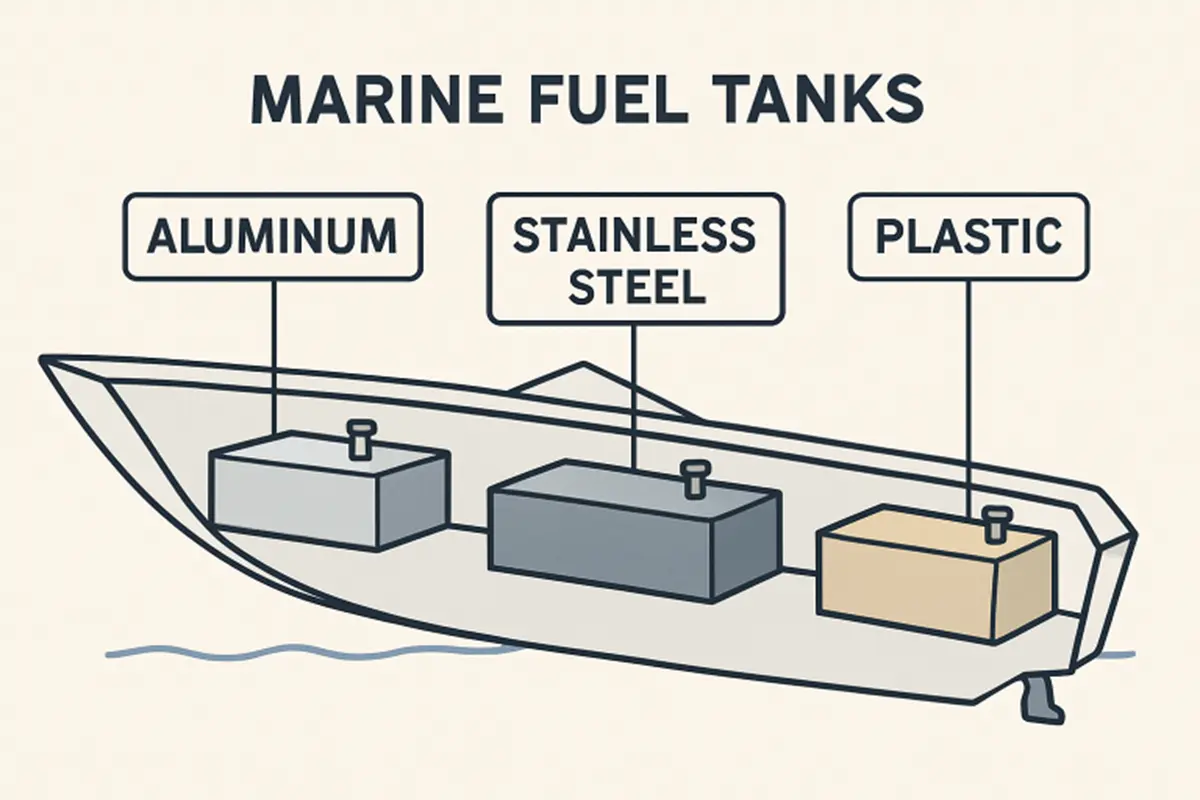
Choosing a fuel tank starts with understanding the properties of each available material. The three most common choices for marine fuel tanks in today’s marketplace are aluminum, stainless steel, and plastic.
- Aluminum Tanks: Aluminum offers a balance between strength and low weight, making it a popular option for many recreational and light commercial vessels. While this metal naturally resists corrosion, it still requires attentive preparation and periodic checks because it can corrode if exposed to saltwater or moisture over time.
- Stainless Steel Tanks: Stainless steel offers outstanding durability and corrosion resistance, standing up well in the harshest marine environments. These tanks are heavier, which could affect the overall balance of smaller boats, and they cost a premium. Still, their longevity often makes them ideal for long-term operators.
- Plastic Tanks: Rotationally molded from high-density polyethylene, these tanks are cost-effective and corrosion-resistant. They are lighter, which may benefit smaller boats, yet they may not perform well with exposure to major temperature fluctuations.
Maintenance Best Practices
Fuel tank maintenance is crucial for preventing leaks, preserving fuel quality, and prolonging the lifespan of both the tank and the engine. Establishing a maintenance schedule is one of the simplest but most powerful investments in your vessel’s future.
- Routine Inspections: Regularly check fuel tanks, connections, and hoses for any signs of wear. Look out for corrosion, bulges, or damp spots, especially near joins and seams. Early detection of issues can prevent costly repairs or catastrophic failures.
- Water Removal: Tanks are prone to condensation, especially when left partially filled, which can cause water to mix with the fuel. Water encourages microbial growth and rust inside metal tanks, risking contamination and fuel system blockages. Draining the tank and treating it with biocides as needed keeps your fuel system running clean.
- Fuel Quality Management: Using fuel additives, such as stabilizers and water absorbers, helps reduce fuel degradation and system buildup. Ensuring the fuel you buy is clean and free from particulates or water is an easy yet essential step in extending engine life.
Safety Protocols During Fueling
Filling up your marine fuel tank can be a routine task, but improper procedures can have serious consequences. Observing strict safety protocols is crucial in preventing fires, explosions, and environmental contamination.
- Preparation: Secure the boat to the dock securely before fueling. Turn off the engine, close all hatches and doors, and make sure all open flames, including cigarettes, are extinguished before starting.
- Fueling Process: Insert the nozzle carefully and fill the tank slowly. Listen for changes in sound to avoid topping off, as overfilling can cause spills. For inboard tanks, fill only up to about 90 percent capacity to leave space for expansion.
- Post-Fueling: Clean up any spills immediately using absorbent pads, then discard them safely. Proper ventilation of the bilge and engine compartments before starting the engine is essential for avoiding accidental ignition of vapors.
Regulatory Standards and Compliance
Your boat’s fuel system must comply with industry standards not only for your safety but also to meet legal requirements. The American Boat & Yacht Council (ABYC) recently updated its H-24 Gasoline Fuel Systems standard, adding rules regarding in-tank fuel pumps and mandatory fuel hose specifications. These changes aim to improve reliability and reduce the risks associated with leaks and fires. Staying up to date on these and other standards is essential for anyone responsible for vessel maintenance.
Emerging Trends in Marine Fuel Systems
The push for greener maritime operations is reshaping the future of marine fuels. The American Bureau of Shipping (ABS) released a guide on dual-fuel vessels operating on new fuels such as LNG, methanol, and ammonia, signaling a shift toward lower-emission, more sustainable options. Vessel owners should consider these alternatives as part of long-term planning for compliance and environmental stewardship.
Final Thoughts
Safely managing marine fuel tanks blends careful material selection, regular preventative care, and strict adherence to fueling safety practices. Keeping abreast of updated regulations and new fuel technologies not only helps you stay compliant but also enhances performance, safety, and environmental responsibility. By understanding these principles and integrating them into your routine, you invest in your vessel’s longevity and ensure safer adventures on the water for years to come.
Also Read
- Understanding the Role of Lawyers in Everyday Life
- Optimizing Restaurant Operations: Key Tips for Running a Successful Business
- UGGWorldTech Gaming Trends by UndergrowthGames: A 2024 Industry Analysis

