


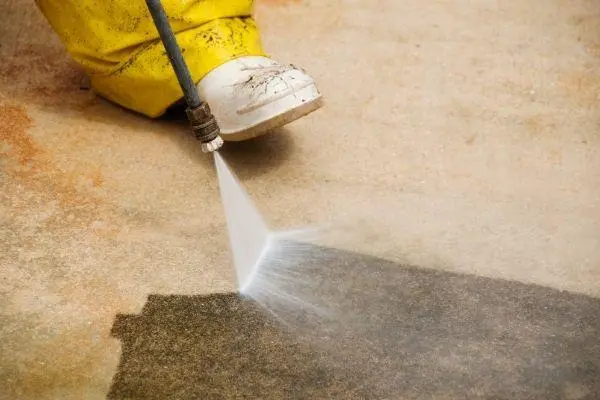
A freshly rinsed driveway can look cleaner for a short time, but many homeowners notice the same frustrating issue returning again and again. Certain spots stay dark, pale streaks show up in random areas, and the surface develops an uneven appearance that simple rinsing never seems to fix. Even with regular maintenance, concrete can still look blotchy, stained, or faded.
The reason has less to do with poor cleaning habits and more to do with how concrete behaves as a material. Concrete is naturally porous, which means it contains tiny openings that absorb water, dirt, oil, and minerals over time. Once those substances settle below the surface, they become difficult to remove with basic rinsing alone.
Understanding why driveways become patchy starts with understanding what happens beneath the surface.
Concrete Is More Absorbent Than It Looks
Most people think of concrete as a solid, sealed surface. In reality, concrete acts more like a sponge. It contains countless microscopic pores that continuously absorb moisture and anything carried within that moisture.
Rainwater pulls dirt into the surface. Vehicle fluids seep downward instead of remaining on top. Minerals from hard water stay behind after evaporation. Even pollution and dust floating through the air eventually settle into the concrete.
This process happens slowly over time. A driveway may appear clean for years before uneven discoloration becomes obvious. Once staining develops, however, rinsing alone rarely solves the problem.
Some homeowners who already invest in regular exterior house washing are surprised to discover that driveways still develop patchy areas despite consistent outdoor cleaning. The reason is that concrete absorbs contaminants differently than siding or other exterior materials.
Some sections darken while others remain lighter because contaminants do not spread evenly. Tire paths collect more grime. Low spots trap standing water. Shaded areas stay damp longer and absorb more buildup.
As a result, the driveway develops a patchy appearance that ordinary water cannot fully correct.
Oil Stains Sink Deep Into the Surface
One of the most common causes of driveway discoloration is automotive oil. Even small leaks can leave lasting marks because oil behaves differently than water.
When oil drips onto concrete, it quickly seeps into the pores beneath the surface. Heat from sunlight can thin the oil, allowing it to travel even deeper into the material. Once absorbed, the stain becomes embedded inside the concrete instead of sitting on top of it.
A garden hose may remove surface residue, but the darker discoloration usually remains because the oil has already penetrated below the visible layer.
Older driveways often show widespread darkening in parking areas because years of tiny leaks gradually build up. Even if individual spills seemed minor at the time, repeated exposure changes the overall tone of the concrete.
This is why some driveways still look stained immediately after being rinsed. Water alone cannot pull deeply absorbed oil back out of the material.
Dirt Becomes Trapped Over Time
Dirt also plays a major role in creating uneven driveway coloration. Outdoor surfaces constantly collect dust, soil particles, pollen, soot, and debris from the surrounding environment.
When rain or rinsing occurs, those particles mix with water and settle into the concrete pores. After the moisture evaporates, the dirt remains trapped inside the surface.
Over time, foot traffic and vehicle traffic compact those contaminants deeper into the material. Areas that receive heavier use become darker while less-used sections stay lighter.
This creates visible contrast across the driveway. Tire tracks may appear permanently stained even though the surface has been rinsed repeatedly.
Basic rinsing only removes loose debris sitting on top. Embedded grime remains below the surface where ordinary water cannot reach effectively.
Mineral Deposits Create Uneven Coloring
Not all driveway stains appear dark. Some show up as chalky white patches, cloudy gray streaks, or rust-colored discoloration caused by mineral deposits.
Water naturally contains minerals such as calcium, magnesium, and iron. As water evaporates from concrete, those minerals remain behind and slowly accumulate.
One common example is efflorescence, a white powdery residue that forms when moisture moves through concrete and leaves salt deposits on the surface. Hard water from sprinklers or hoses can also create cloudy buildup over time.
Rust-colored stains may appear when metal particles or iron-rich water react with oxygen and moisture.
Mineral deposits rarely spread evenly because water does not evaporate uniformly across the driveway. Areas exposed to runoff, irrigation, or poor drainage usually experience heavier buildup.
In many cases, repeated rinsing actually contributes to the issue by introducing additional minerals without fully removing the existing deposits.
Sunlight and Moisture Affect the Surface Differently
Environmental conditions also influence how patchy a driveway appears.
Sections exposed to direct sunlight dry faster than shaded areas. Faster drying changes the way contaminants settle and how moisture evaporates from the concrete. Meanwhile, shaded sections remain damp longer, allowing grime, algae, and mildew to penetrate more deeply.
Over time, repeated wet-and-dry cycles gradually alter the appearance of the surface. Some areas bleach slightly from UV exposure while others darken because they retain moisture longer.
Temperature differences across the driveway can also affect stain absorption. Warm concrete absorbs liquids differently than cooler sections, contributing to inconsistent coloration.
Even if a driveway is rinsed regularly, these environmental factors continue influencing the surface every day.
Why Basic Rinsing Does Not Solve the Problem
Many homeowners assume they simply need to rinse more often if the driveway still looks dirty. However, the issue is not usually the frequency of cleaning.
A standard hose mainly removes loose debris from the surface. It does little to address contaminants embedded deep within the concrete. Since most discoloration exists below the outer layer, rinsing provides only temporary improvement.
Water also cannot easily dissolve certain substances responsible for staining. Oil naturally resists water. Mineral deposits often require specialized treatments. Compacted dirt clings tightly to porous concrete.
Without enough pressure or proper cleaning methods, contaminants remain trapped inside the material.
This explains why a driveway may still appear spotted after drying, even if it looked cleaner while wet. Moisture temporarily masks the uneven tones, but the stains reappear once the surface dries completely.
Surface Wear Makes Staining More Visible
As concrete ages, its texture changes. Weather exposure, vehicle traffic, and gradual wear create tiny pits, cracks, and rough areas across the surface.
These imperfections trap dirt, oil, and moisture more easily than newer, smoother concrete. Rough surfaces also reflect light unevenly, making discoloration appear more noticeable.
Even minor staining can stand out sharply when the surface texture becomes irregular.
This is one reason older driveways often seem impossible to keep evenly clean despite regular rinsing and maintenance.
When Deeper Cleaning Becomes Necessary
In some cases, deeper cleaning methods are needed to improve the appearance of heavily stained concrete. Professional pressure washing services can sometimes remove contaminants lodged beneath the surface by using stronger water pressure and specialized cleaning solutions.
However, even professional cleaning works best before years of buildup accumulate. Once stains penetrate deeply into aging concrete, complete restoration becomes more difficult.
Final Thoughts
Driveways develop a patchy appearance because concrete absorbs contaminants instead of simply holding them on the surface. Oil seeps into pores, dirt becomes compacted over time, and mineral deposits accumulate unevenly across the material. Sunlight, moisture, and surface wear further increase the contrast between different sections of the driveway.
Since most discoloration exists beneath the visible surface layer, ordinary rinsing cannot fully remove it. Water may wash away loose debris, but embedded stains remain trapped inside the concrete.
Understanding how concrete reacts to years of exposure helps explain why some driveways continue looking uneven no matter how often they are rinsed. The issue is not necessarily poor cleaning habits, but the natural behavior of the material itself.
Also Read-How to Become Raja Luck in Real Life

