


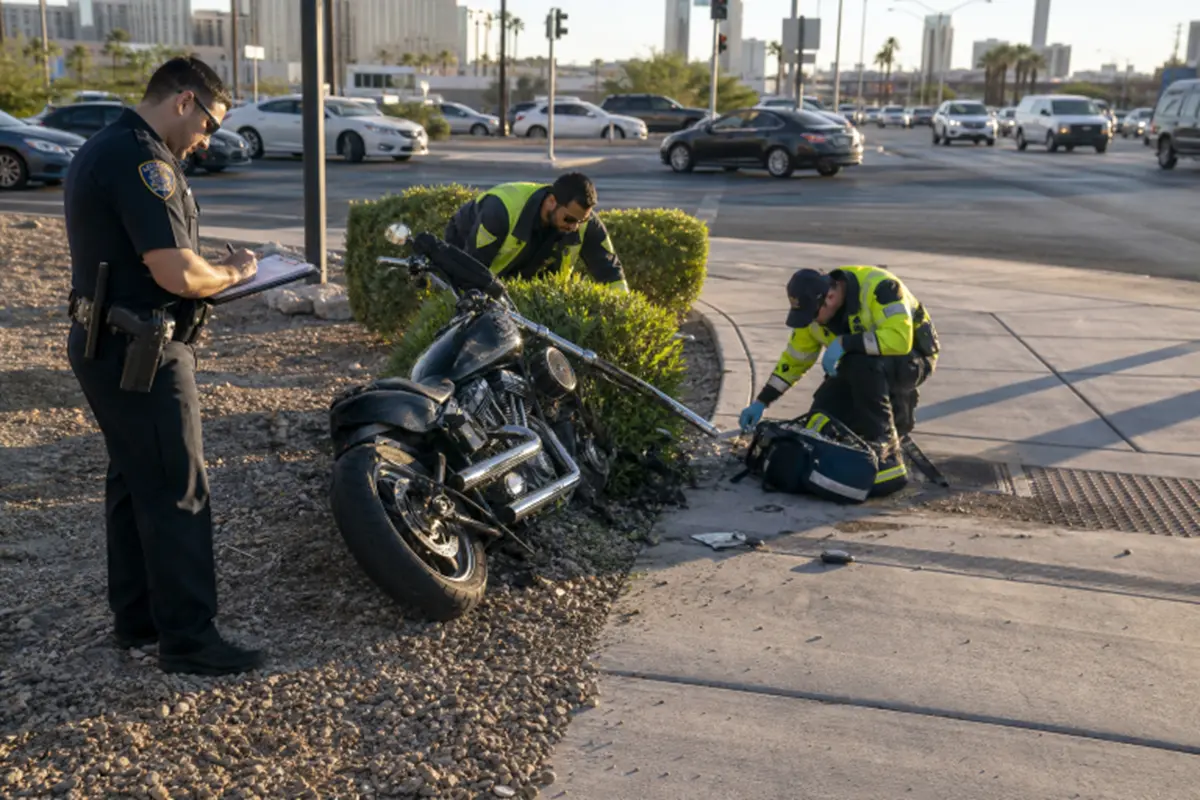
Key Takeaways
- Medical care and immediate safety come before insurance paperwork or fault discussions.
- Photos, witness information, police reports, and damaged gear can help preserve the facts.
- Motorcycle crashes often involve disputed visibility, turns, lane changes, road hazards, and speed allegations.
- Legal representation can help an injured rider understand insurance communications, evidence, damages, and deadlines.
- Early settlement offers may not account for future treatment, missed work, or lasting limitations.
A motorcycle collision can turn an ordinary ride through Las Vegas into a difficult medical, financial, and legal situation within seconds. Between emergency treatment, a damaged bike, missed work, and calls from insurance companies, it can be hard to know which steps matter most. Speaking with a Las Vegas motorcycle injury lawyer may help an injured rider evaluate the situation while focusing on treatment and recovery.
Legal representation is not only about filing a lawsuit. In many cases, it begins with organizing evidence, identifying available insurance coverage, communicating carefully with adjusters, and making sure the rider understands important choices before signing documents or accepting payment.
Why the First 72 Hours Matter
The first three days after a crash can be confusing. Adrenaline may hide pain, memories can be incomplete, and the other driver or insurer may already be giving their version of events. Quick, calm action can protect both health and the accuracy of the record. Riders should prioritize emergency care, preserve evidence when safe to do so, and avoid guessing about facts they cannot clearly recall.
Step One: Get to Safety and Call for Help
If a rider can move without risking further injury, they should get out of active traffic and away from leaking fuel, fire hazards, or oncoming vehicles. A person with severe pain, numbness, weakness, breathing problems, heavy bleeding, possible head trauma, or a suspected neck or spine injury should avoid unnecessary movement and wait for emergency responders unless the location presents an immediate danger.
Call 911 and provide the location, number of vehicles involved, visible injuries, traffic hazards, and any fire risk. Accepting an evaluation is important even when symptoms initially seem minor. Concussions, internal injuries, fractures, and soft-tissue damage may become more apparent hours or days later.
Step Two: Let Police and Medical Personnel Document the Scene
A police report and medical records can become important sources of information after a motorcycle accident. Give officers a direct and truthful account, but do not fill memory gaps with assumptions. “I do not remember that part” is more accurate and useful than estimating speed, distance, or fault.
Las Vegas riders also face heavy traffic, unfamiliar tourists, busy intersections, nighttime visibility issues, and rapid lane changes on major roads. Nevada recognizes that motorcyclists have the same roadway rights and responsibilities as other drivers, including the right to use a full traffic lane, as explained in the state’s guidance on sharing the road with motorcycles.
Step Three: Preserve Evidence When It Is Safe
Photographs and videos can document details that may disappear quickly after vehicles are moved or debris is cleared. Start with wide views of the roadway and intersection, then take closer images. Useful images may include:
- Vehicle positions, damage, license plates, and debris.
- Traffic signals, lane markings, signs, lighting, and sight lines.
- Skid marks, potholes, gravel, fluid, construction zones, or road defects.
- The motorcycle, helmet, riding gear, and visible injuries.
- Weather, road surface conditions, and nearby businesses with cameras.
Collect the other driver’s name, contact information, insurer, policy details, license information, and vehicle description. If witnesses are present, obtain their names and phone numbers before they leave. A short note about what each witness observed can be valuable later.
Step Four: Protect Medical and Financial Records
Keep a dedicated crash folder, whether digital or physical. Include discharge instructions, diagnostic records, prescriptions, bills, receipts, appointment dates, repair estimates, towing invoices, and proof of lost income. A daily journal can also record pain levels, sleep disruptions, mobility problems, medications, missed activities, and emotional symptoms.
Follow medical instructions and attend recommended follow-up appointments. An insurer may question gaps in treatment, but more importantly, consistent care gives medical professionals a clearer picture of the injury and recovery process. Decisions about treatment should always be made with qualified health care providers.
Step Five: Handle Insurance Communications Carefully
Most policies require prompt notice of a collision, so report the crash within the applicable policy timeframe. The initial report can be brief and factual. There is no need to offer a complete legal analysis of fault, predict recovery time, or minimize injuries while facts and medical needs are still developing.
Be cautious about recorded statements, broad medical authorizations, social media posts, and quick settlement offers. A settlement may close the claim before the full cost of surgery, rehabilitation, future care, lost earning ability, or motorcycle repairs is known. Legal representation can help a rider understand what an insurer is requesting and whether a proposed resolution addresses the complete loss.
How Fault May Be Evaluated in a Las Vegas Motorcycle Crash
Motorcycle cases are often more complicated than a simple exchange of statements at the scene. Fault may be evaluated through police reports, witness accounts, vehicle damage, surveillance footage, traffic-camera footage, roadway evidence, phone records, and medical documentation.
Common Crash Patterns
- A driver turns left across the motorcycle’s path.
- A vehicle changes lanes without seeing the rider.
- A distracted or impaired driver fails to yield.
- A motorist follows too closely or misjudges the motorcycle’s speed.
- Road debris, poor lighting, unsafe construction conditions, or defective equipment contribute to the crash.
Insurance companies may argue that the rider was speeding, lane splitting, difficult to see, or partly responsible. Evidence matters because motorcycle stereotypes should not replace a careful review of what actually happened. Nevada’s comparative-fault rules and the facts of each case can affect potential recovery, so serious or disputed cases deserve individualized legal advice.
Protect the Motorcycle and Riding Gear
Do not discard the helmet, jacket, boots, gloves, or damaged motorcycle parts before they are photographed and documented. The damage may help show the force and direction of impact, while invoices and estimates can establish property losses. Before authorizing substantial repairs, take detailed photos, save towing and storage records, and confirm whether an insurer needs to inspect the motorcycle.
Deadlines and the Value of Early Legal Guidance
Waiting too long can make a case harder to investigate. Video footage may be overwritten, witnesses may become unavailable, and physical evidence can be repaired or lost. Nevada also imposes filing deadlines. For many personal injury claims, the applicable deadline is generally two years, but exceptions and claim-specific rules can apply under Nevada’s limitations statute. Prompt advice is especially important when a government entity, a commercial vehicle, an uninsured driver, or a fatal injury is involved.
Questions Riders Often Ask
Should I accept the first settlement offer?
Not without understanding what it covers and what rights may be released. Early offers may arrive before the full medical outlook is known.
What if I felt fine at the scene?
Seek medical attention if symptoms appear or worsen. Delayed pain does not necessarily mean the injury is minor.
Do I need a lawyer if the fault seems obvious?
Even seemingly clear cases can involve insurance disputes over injuries, treatment, wages, property damage, or available coverage.
Conclusion
After a Las Vegas motorcycle accident, safety, medical care, and documentation should come first. Once immediate needs are addressed, careful recordkeeping and informed communication can help protect a rider’s options. Legal representation may provide practical support during a stressful process, particularly when injuries are serious, fault is disputed, or an insurer pushes for a fast resolution.
Also Read-Tech Console DefStartup: Empowering Gaming Innovation

